Regional Regulatory Differences Shaping Bonus Distribution Patterns in Cross-Device Gaming Networks
Elena Koch · Oct 4, 2026
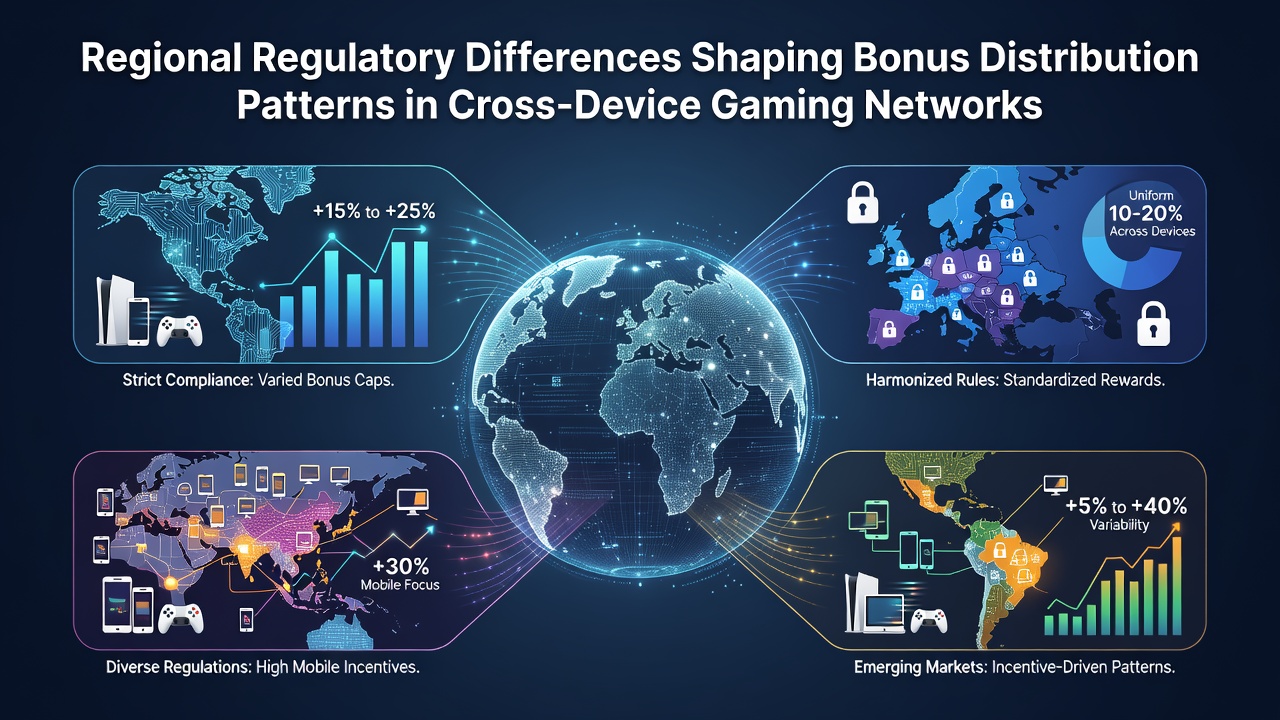
Regional Regulatory Differences Shaping Bonus Distribution Patterns in Cross-Device Gaming Networks
Regional rules create distinct patterns in how operators allocate bonuses across phones, tablets and desktop platforms, and these patterns shift as jurisdictions update their frameworks. In October 2026 several European states plan to enforce updated digital gambling directives that cap bonus values differently depending on the device used to claim them, while North American provinces continue to refine their own standards for cross-border play.
European Variations in Bonus Caps and Device Tracking
Operators serving multiple European markets must adjust bonus structures because national laws treat eligibility and redemption windows in separate ways. Germany requires strict age verification and limits promotional credits to a single device per account, whereas Malta permits higher value offers provided operators log each platform separately. Data compiled by the European Commission shows that these differences lead to segmented bonus pools, with mobile users often receiving smaller but more frequent rewards compared with desktop players who face higher thresholds before funds become withdrawable.
France and Spain add another layer through mandatory cooling-off periods that reset when a player switches devices. Observers note that this forces providers to maintain parallel tracking systems, which in turn influences how welcome packages and loyalty rewards distribute across networks. Those who study these markets point out that operators now embed device-specific identifiers into bonus terms to stay compliant without disrupting user flow.
North American State and Provincial Approaches
Across the United States and Canada, regulatory fragmentation produces even sharper contrasts. New Jersey and Pennsylvania tie bonus redemption to physical location checks that must re-verify when a user moves from mobile data to Wi-Fi, while Ontario permits province-wide access once an account is verified through its central system. Figures released by the National Conference of State Legislatures indicate that states with location-based rules see lower cross-device bonus uptake because players encounter repeated verification steps. In contrast, provinces that allow seamless account portability record higher average bonus redemption rates across tablets and smartphones.
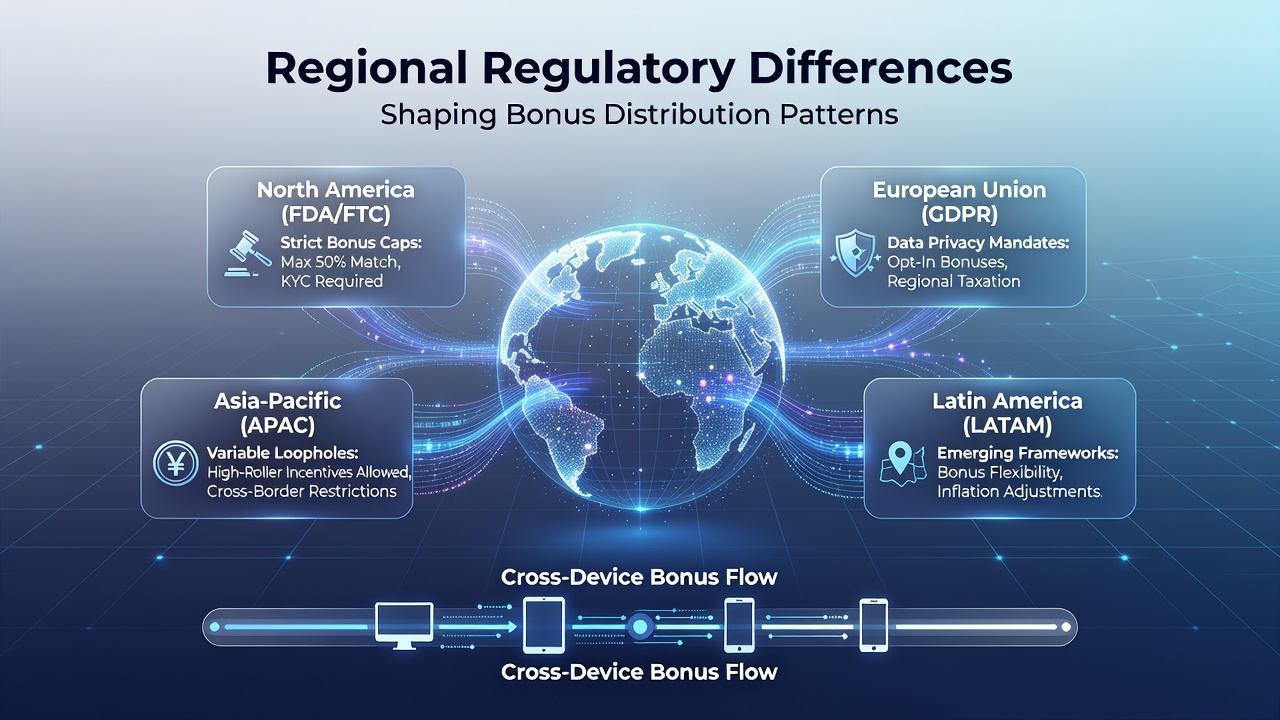
Canadian regulators also require clear disclosure of wagering requirements that differ by platform, prompting operators to display separate progress bars for mobile and desktop play. This approach creates data trails that researchers use to map how bonus values migrate between devices within the same jurisdiction.
Asia-Pacific Regulatory Influence on Network Design
Australian and New Zealand frameworks emphasize consumer protection through mandatory spend limits that operators must apply uniformly across all connected devices. Reports from the Australian Communications and Media Authority reveal that these uniform limits reduce the ability to offer device-specific bonuses, resulting in flatter distribution patterns compared with markets that allow segmented offers. Singapore maintains even tighter controls by prohibiting bonus promotions entirely for certain game types, which pushes operators to route players toward non-bonus features when they switch platforms.
Japan’s emerging licensed market, scheduled for phased rollout beginning in late 2026, plans to introduce device registration requirements that mirror those already operating in parts of Europe. Industry analysts expect these rules to further segment bonus availability, with mobile networks facing stricter daily caps than fixed-location terminals.
Cross-Device Tracking and Compliance Systems
Operators respond to these regional differences by deploying unified player accounts that record device history, bonus claims and redemption status in a single ledger. This architecture allows real-time compliance checks while still enabling the network to deliver offers tailored to each jurisdiction’s current rules. Technical teams integrate geo-location data, account age and previous device usage into decision engines that determine whether a bonus activates on a new platform.
Studies conducted by academic groups tracking iGaming behavior show that such systems reduce accidental violations yet increase the complexity of user interfaces. Players often encounter different bonus menus depending on the region detected by their connection, and these menus update automatically when regulatory thresholds change.
Conclusion
Regional regulatory differences continue to drive the evolution of bonus distribution across cross-device gaming networks, producing varied patterns that operators must navigate through precise tracking and segmented offers. As new rules take effect in October 2026 and beyond, these patterns will likely become more defined, with device-specific limits and verification steps shaping how rewards reach players in each market.